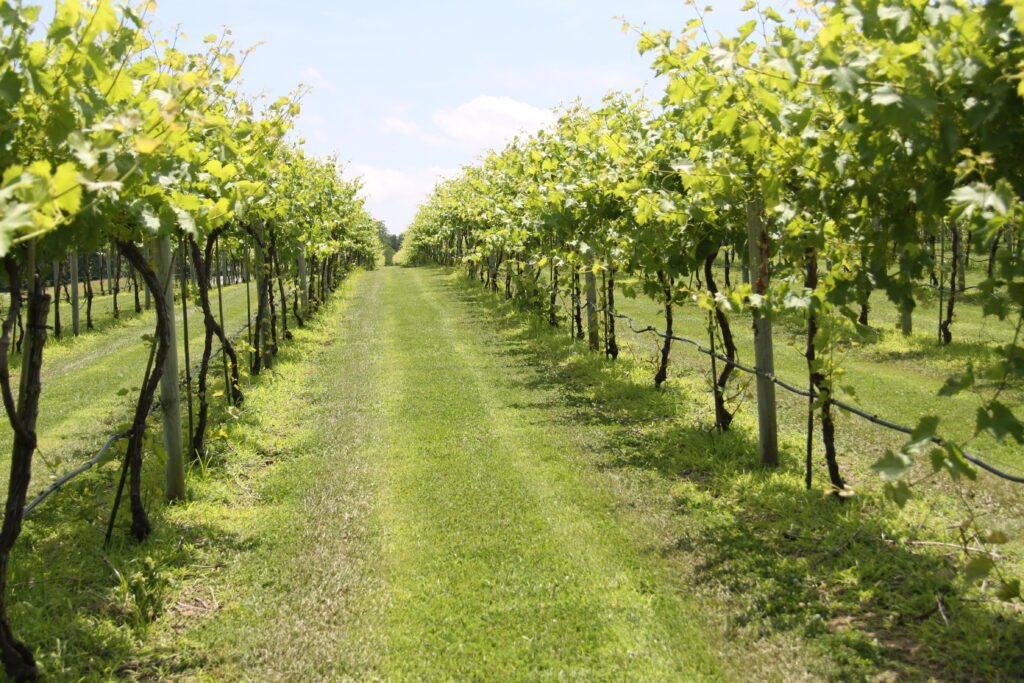
Vineyard in Southern Illinois.
Wine Came to Illinois in the 17th century.
Winemaking in Illinois dates to 1691, with the building of a fort by the Frenchmen Tonto and Francois Daupin de LaForest in the town now known as Peoria, where records show that the village surrounding the fort had a wine press. In 1778, Jean Baptiste Maillet established a settlement just south of the fort, and evidence indicates that the French settlers there had a wine vault and a winepress, suggesting the community was producing wine.
It was not until the mid-1800’s that the Illinois wine industry truly took root, with the establishment of the now-oldest surviving vineyard in Nauvoo, Illinois, on the banks of the Mississippi River. Emile Baxter came to Nauvoo in 1855 to join an Icarian commune, a French-based utopian socialist movement, and stayed after the group’s breakup. Having learned about winemaking from his French friends at the commune, Emile planted 8 acres of vineyards near downtown Nauvoo.
Emile was joined by his sons Emile Jr., Tom, and Cecil to form the family business, E. Baxter & Sons, proprietors of the Golden Hills Vineyards, which later became Baxter Brothers. During Prohibition, the Baxter Brothers remained in business by selling grapes to northern markets for personal winemaking and consumption, as well as apples and pears locally. In 1936, shortly after Prohibition ended, the Baxter family obtained a wine manufacturing license and established the first bonded winery in Illinois.
In 1987, Fred Baxter’s grandson, Kelly Logan, and his wife, Brenda, took over operations and renamed it Baxter’s Vineyards. Baxter Vineyard and Winery in Nauvoo remains the oldest operating winery in Illinois. To learn more about the history of Baxter’s Vineyards, visit NauvooWinery.com.
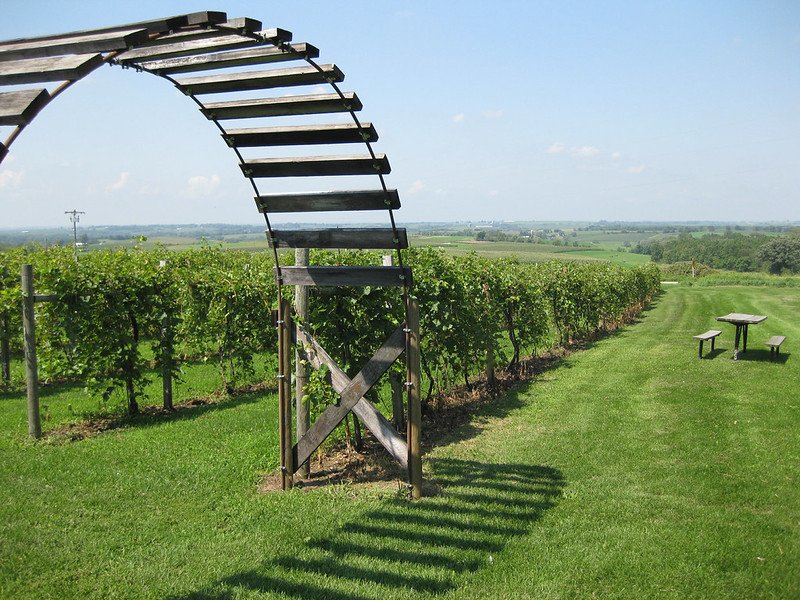
Galena Cellars in Galena, Illinois via Flickr.
The Growth and Demise of the Illinois Wine Industry
The Illinois wine industry grew throughout the 19th It’scentury, with vineyards and wineries established in Peoria, Belleville, Bloomington, and many other locations. By the late 1880’s, over 3,800 acres of grapes were planted in Illinois, with 600 alone in Nauvoo, and it became home to 40 wineries. By 1900, Illinois was the fourth largest wine producing state in the nation. But, as in so many states with booming wine industries, it all came to a halt with the enactment of Prohibition in 1919. During Prohibition, some vineyards continued to grow table grapes, while others uprooted their vines to plant corn and soybeans and never returned to wine production once Prohibition ended.
Illinois Wine in the 20th century
After Prohibition, the Illinois wine industry did not really begin to flourish again until the 1970’s. In 1976, a state law was passed allowing wineries to sell their wine to consumers on-site. An early entrant into the industry was Fred and Lynn Koehler, who established the Lynfred Winery in Roselle, Illinois, just west of Chicago, in 1979. Looking to make the highest-quality wine, Fred sourced grapes from California, Washington, Michigan, Illinois, and, recently, Chile. The business grew over the years, and in 1997, the Koehlers built and opened a brand-new tasting room, a luxury bed-and-breakfast, and a modern wine production facility capable of producing 100,000 gallons of nationally recognized wine annually. To plan a day trip or an overnight stay at the winery, visit LynfredWinery.com.
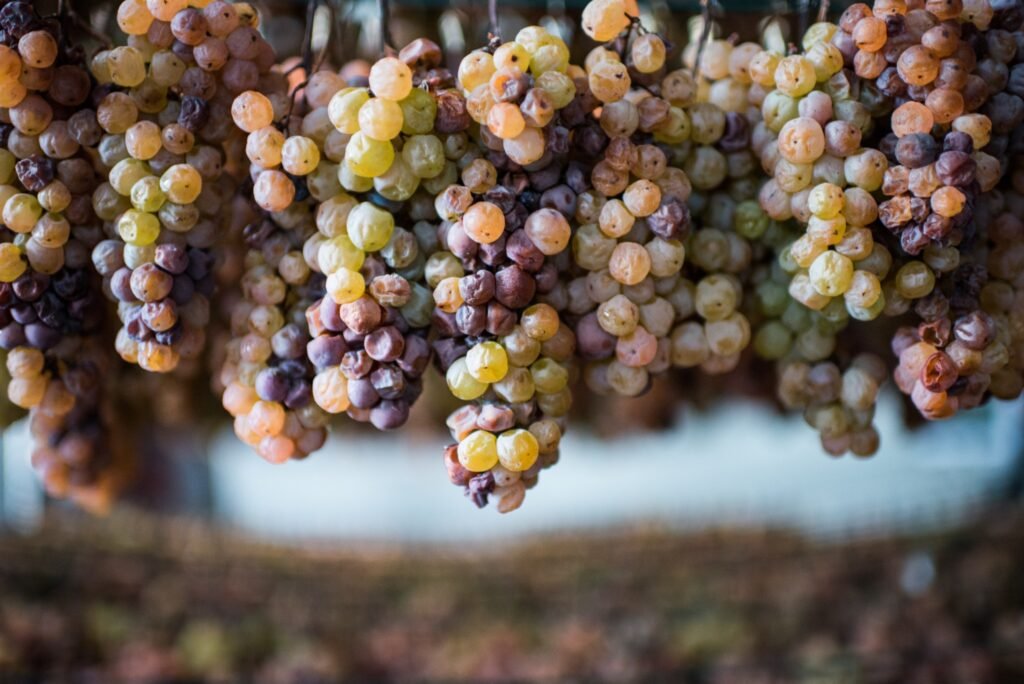
Image of grapes on the vine courtesy of Recette Magazine.
Growth of the Illinois Wine Industry
From 1980 to 1997, wineries were established throughout Illinois northern, central, and southern regions. By 2004, the wine industry had exploded with 63 operating wineries across the state. The Shawnee Hills region in southern Illinois became one of the state’s foremost grape-growing regions due to its higher elevation, well-draining soil, and summer breezes that reduce fungal infestation. In 2006, the Shawnee Hills American Viticultural Area (AVA) was designated by the federal government, becoming the first AVA in Illinois. The AVA encompasses approximately 15 wineries and 55 vineyards that grow primarily native American and French Hybrid grapes such as Chambourcin, Chardonel (a cross between Chardonnay and Seyval), Traminette, and Vignoles. Wines that have the “Shawnee Hills” designation on the label ensure that at least 85% of the grapes used to make the wine are grown within the Shawnee Hills AVA.
In 2009, the Upper Mississippi River AVA was established. It is a multi-state appellation that includes Minnesota, Wisconsin, Iowa, and a small part of Northwestern Illinois. Galena Cellars, in Galena, Illinois, was one of the first vineyards and wineries established in this part of the state in 1985 by the Lawlor family. However, they had been making wine in Iowa and Wisconsin since 1979. Galena Cellars remains a family-owned and operated business, with daughter Christine as the head winemaker for the last 25 years. To learn more about Galena Cellars, visit GalenaCellars.com.
The Wine Industry Today
Today, Illinois is home to over 165 wineries and tasting rooms across the state, offering award-winning wines made from native American, French Hybrid, and Vinifera grapes, as well as local fruit. Rosé wine is the official wine of Illinois, and many wineries offer an “Illinois Signature Rosé.” To receive this distinction, a wine must use 100% Illinois-grown grapes and pass extensive chemical and sensory analysis, conducted by enology specialists and wine industry experts. A Signature Rosé will exhibit lovely fruit and floral flavors, a gorgeous pink color, and a crisp finish. To learn more about the Rosé wines of Illinois, as well as see a list of wineries and the five Illinois wine trails, visit the Illinois Grape Growers and Vintners Alliance (IGGVA) at visit the Illinois Grape Growers and Vintners Alliance (IGGVA) at IllinoisWine.com.
This article was originally written for Recette Magazine, and was published online on May 14, 2021. See the original article here: https://blog.suvie.com/all-about-alabama-wine. See all of the Fifty States of Wine articles here: https://alwayssharingwine.com/category/asw-blog/fifty-states-of-wine. See all of Susan’s previously published articles here: https://alwayssharingwine.com/tag/previously-published.