|
|
|
|
|
|
Summer Newsletter Part Two
|
It’s mid-August, and we are through the “dog days” of summer, and there is less of it ahead of us than behind. The Fourth of July has come and gone, guests have been welcomed, lobster rolls eaten, BBQs fired up, and some delicious summer wine consumed. But the sun is setting earlier, and there has been a nip in the air some evenings. Coming to the close of summer makes me a bit melancholy. I fight it by getting up earlier, making the most of each sunny day, and savoring the orange-red sunsets over the sea in the evening.
|
|

|
|
Sunset over the river in Gloucester.
|
|
Cheers to the rest of summer,
Susan
|
|
|
|
|
|
In This Issue
It is prime tomato season here on the East Coast. Here’s what you need to know about their nutritional benefits and three wine styles that go well with tomato-based dishes.
|
|
This summer I have been asked more frequently about non-alcoholic wines and what I think of them. I decided to learn more about the process of dealcoholizing wine and try a few to develop my own opinion. I will share three processes for making non-alcoholic wine and suggest a couple of bottles I have found tasty enough to satisfy the palate.
|
|
|
|
Summer is Tomato Time
|
|
|
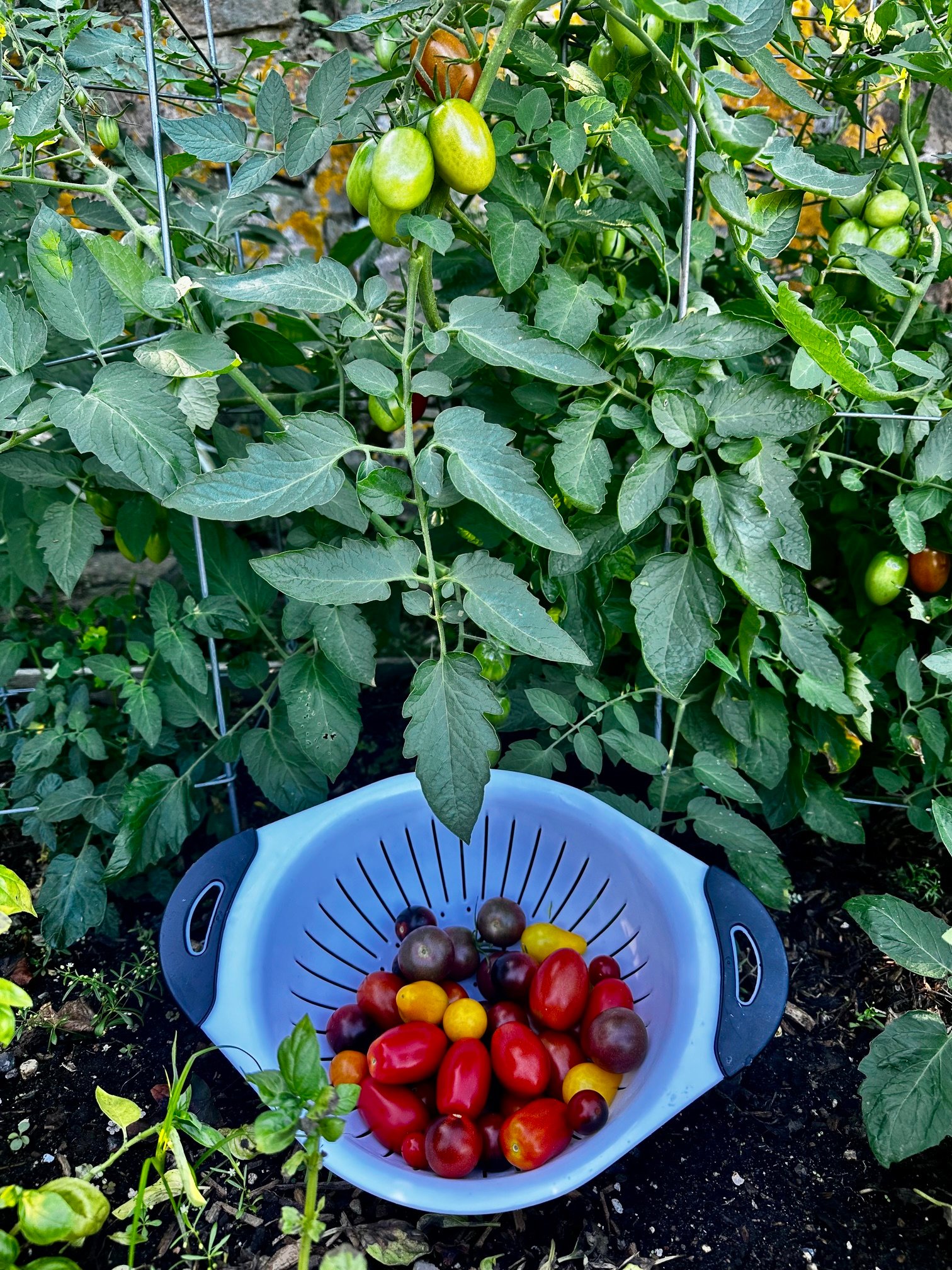
The bounty of tomatoes from my garden.
|
|
Summer is the best time to enjoy all the wonderful locally grown fruits and vegetables at farm stands, farmers' markets, or your own backyard garden. And one of the most popular summer fruits, though most use it like a vegetable, is the tomato. They come in all shapes and sizes, but nothing spells summer like a fresh tomato salad or a slice of tomato on your burger, hot off the grill. Best of all, they are good for your health.
|
Tomatoes are a major dietary source of the antioxidants lycopene and beta-carotene, as well as many other vitamins and minerals important for good health, including vitamin C, vitamin K, potassium, and folate. Tomatoes are also high in fiber and low in carbohydrates and calories. An average small tomato contains 18 calories and 5 grams of carbohydrate, most of which comes from insoluble fiber, which has been shown to help lower blood cholesterol levels.
|
A study published in the Journal of Clinical Nutrition (2018) concluded that high dietary intake of fruits and vegetables rich in vitamin C, carotenoids (e.g., lycopene), and other antioxidants was associated with a reduced risk of cancer, heart disease, and premature mortality. The researchers presume that it was not individual antioxidants that reduced the risk, but rather a collection of components found in fruits and vegetables.
|
|
Tomato and Wine Pairing Recommendations
|
|
|
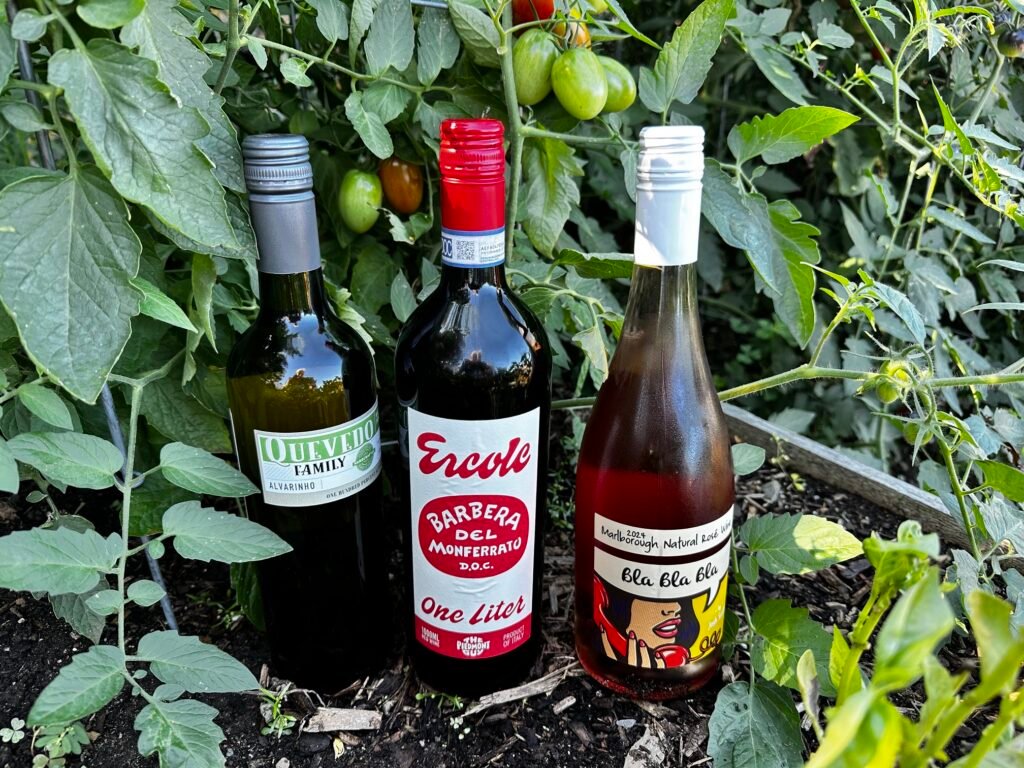
Wines that pair with tomato.
|
|
Tomatoes are naturally acidic, and dishes made with raw or cooked tomatoes pair best with wines that are also high in acidity. Whether it is a tomato salad, grilled pizza, or a tomato gratinée, I recommend serving tomato dishes with one of these wine styles.
|
|
White: Quevedo family Alvarinho (same grape as Albariño) from Portugal has bright acidity and aromas and flavors of pear, apple, and a hint of citrus. Great with fresh tomato salsa and chips or tomato salad.
|
Rosé: Josh Scott, Bla, Bla, Bla Rose, from Marlborough, New Zealand. Made from a blend of Pinot Noir and Pinot Gris grapes. This wine has classic floral and red berry notes along with hints of toast, apple, quince, and stone fruit. Great with cheese and tomato dishes.
|
Red: Ercole Barbera del Monferrato, from Piedmont, Italy. Made from the Barbera grape, it is juicy, with balanced acidity, medium body, and soft red and black fruit flavors. Will pair well with pizza and roasted tomato based pasta.
|
|
|
|
|
|
|
|
The Secret to Making Non Alcoholic Wine
Making non-alcoholic (NA) wine is actually more work and takes longer than making standard wine. A winemaker still has to harvest grapes, crush them, and let yeast convert the natural sugars into alcohol through fermentation. The wine then needs to be aged, blended, and finished just like any traditional bottle you might buy.
|
The goal is to develop a wine that has complex flavors, good texture, and balance before removing alcohol, chemically known as ethanol. Popular grape choices for non-alcoholic wine include Pinot Grigio, Chardonnay, and Sauvignon Blanc for white wines, and Cabernet Sauvignon and Merlot for reds.
|
Alcohol carries flavor, contributes to mouthfeel, and helps deliver the aromatic compounds that hit the nose when you swirl a glass. Remove it haphazardly, and you're left with a flat, watery, and sweet or sour wine. The challenge for winemakers is removing the ethanol while preserving as much of the wine's original character as possible.
|
|
Starting with fully mature, alcohol-containing wine, producers use one of three processes to remove alcohol. NA wines can have two levels of alcohol removal one, 100% and will be marked 0.0% Alc. Or two almost all the alcohol is removed, leaving a trace amount of 0.5% Alc., which is about the same amount of alcohol as in a ripe banana.
|
|
One of the oldest and most popular methods is vacuum distillation. It basically causes alcohol to evaporate from the wine by boiling it. But alcohol boils at a very high temperature, which can damage the wine. The vacuum distillation process combats this by reducing the air pressure inside the equipment, thereby lowering the alcohol's boiling point. That means the wine never gets too hot and retains much more of its natural aroma and flavor, helping keep it from being “cooked” and losing its freshness.
|
Unfortunately, during the process some aromatic compounds may still drift away with alcohol. A skillful producer will capture those aromas and add them back into the wine before it is ready for sale.
|
Reverse osmosis is a filtration technique. It separates alcohol molecules from other wine components. The wine is pushed through an ultra-fine filter that splits it into two parts. On one side, you get water and alcohol; on the other, components like flavor, color, and texture are captured.
|
The alcohol is gently removed from the water by distillation, and the water is then blended back with the concentrated wine. What you’re left with is a wine that keeps most of its original character, just without the alcohol.
|
The biggest advantage of reverse osmosis is its gentleness. It does an excellent job of preserving flavor and aroma. However, it is slow and costly for the producer, which is why it is usually reserved for higher-end non-alcoholic wines.
|
This is a newer, high-tech method that has quickly become a go-to for premium winemakers.
|
This method uses a vertical column filled with spinning cones. As the cones rotate, they spread the wine into a thin liquid film increasing its surface area and lowering the alcohol’s boiling point to minimize heat exposure. At the same time, a gentle stream of steam passes through, carefully lifting out different compounds in multiple stages. What makes this method stand out is its precision. Winemakers can remove the delicate aroma compounds first and set them aside. Then they take out the alcohol. Finally, they blend those aromas back into the now de-alcoholized wine.
|
|
After alcohol extraction, winemakers fine-tune the blend as the removal of alcohol impacts the wine’s body, sweetness, acidity, and other characteristics. Winemakers may add grape must or juice in small amounts, along with citric or tartaric acid. Preservatives are also often added, and in sparkling wine, carbon dioxide is added to give it more fizz.
|
|
|
|
|
|
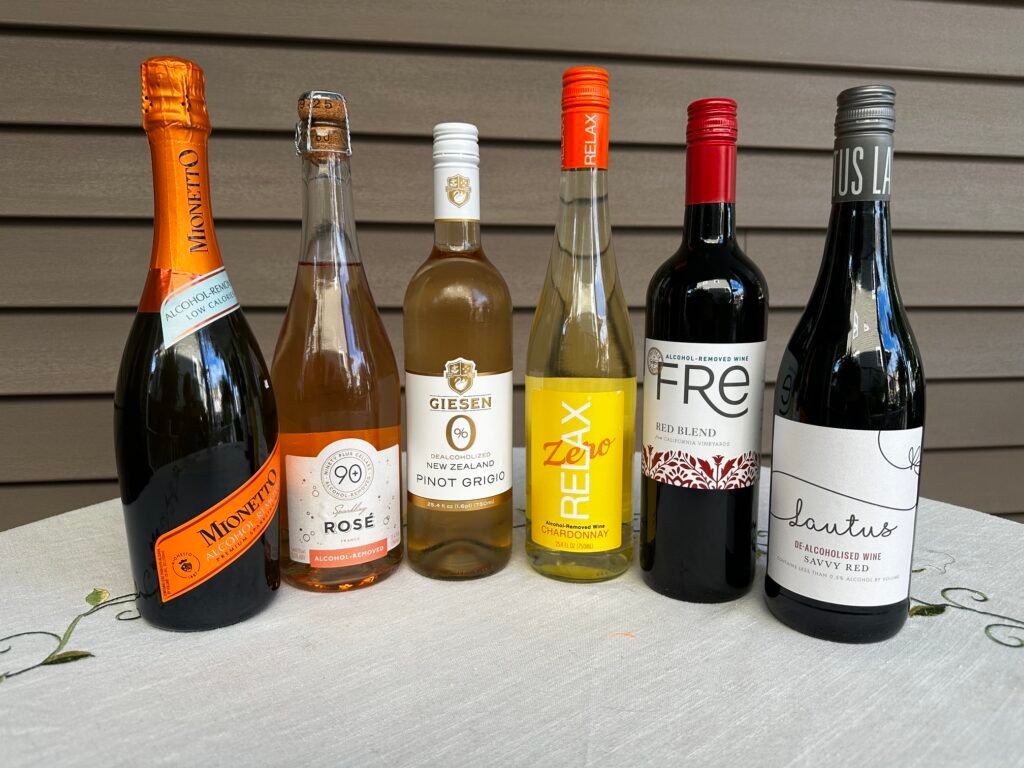
Some examples of non alcoholic wine.
|
|
Non-Alcoholic Wine Recommendations
I tried a number of non-alcoholic or de-alcoholized wines: sparkling, white, rosé, and red. I found the sparkling wines came closest to the true taste of an alcohol containing version. My two favorites are Italian Mionetto Prosecco and 90+ Cellars Sparkling Rosé from France. Both were crisp with a nice effervescence and refreshing taste.
|
For white wines, the standout was Giesen Pinot Grigio from New Zealand a 0% NA wine. It has a nice body and acidity, with herbaceous, pear, and apple notes. Chilled with an ice cube, it makes an easy sipper. They also make a rosé that’s pretty good if you like rhubarb and watermelon flavors.
|
The red wines were disappointingly dull. The two I tried lacked body and texture, key components of red wine that tannins contribute and that make it taste good. The Fre Red Blend listed “21% juice” on the label, and it tasted like it.
|
|
One may choose to drink non-alcoholic wine for a number of reasons. It could be due to a health condition, pregnancy, weight loss, or not wanting to drink and drive. And it was nice to discover there are some decent options available. One trick I have employed to improve the taste of an NA wine is to add 1-2 ounces of regular wine to a glass of the NA version. It adds an enjoyable amount of flavor while keeping the alcohol low.
|
|
|
|
|
|

|
Always Sharing Wine
WSET Level 3 Certified in Wine
Certified Specialist of Wine
|
|
|
|
|
|
    
|
|
|
Copyright 2026. All rights reserved.
|
|
Always Sharing Wine
Gloucester, Massachusetts
|
|
|
|
|
|
|
|
|